
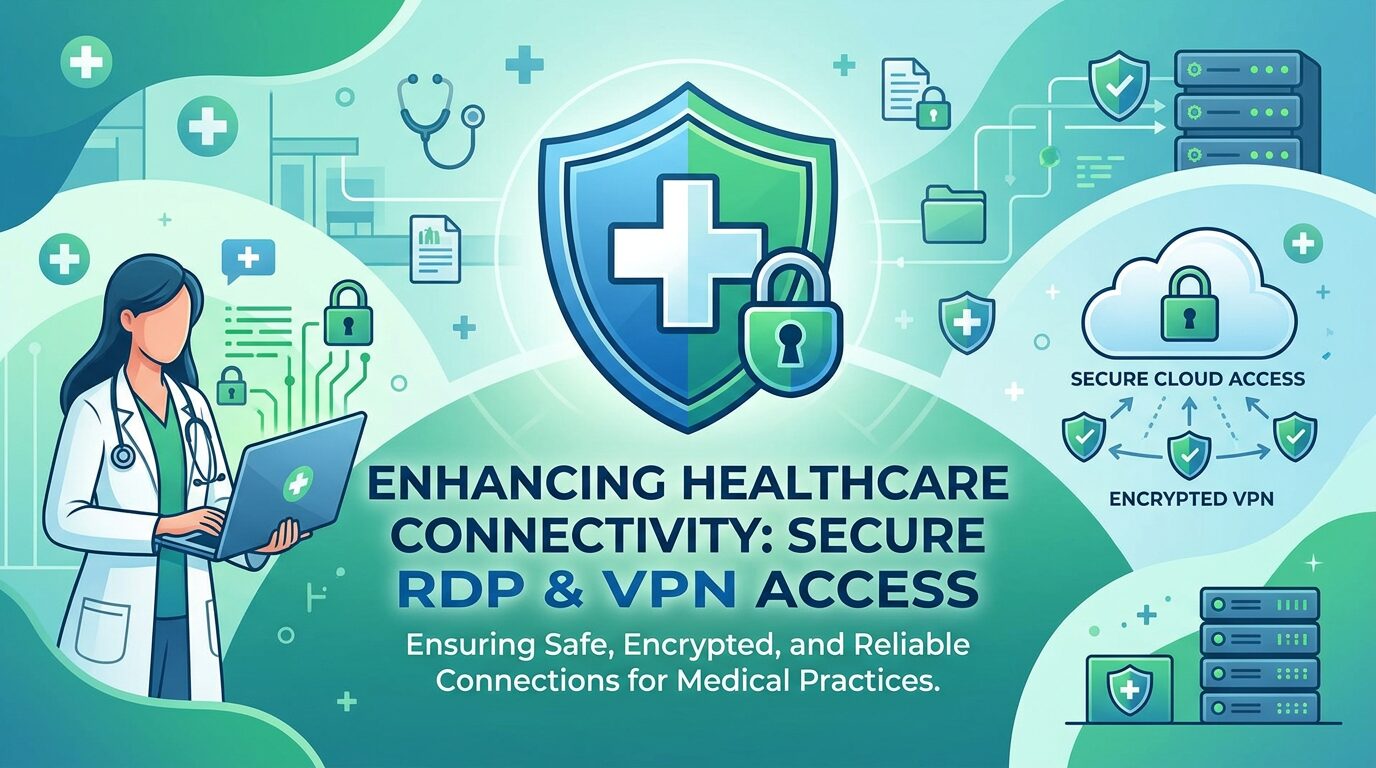
The healthcare world is experiencing a profound shift. What was once a career confined to clinics and hospitals now extends into home offices, remote workstations, and even virtual waiting rooms. From physicians consulting via telehealth to healthcare administrators handling sensitive data remotely, work-from-home is not just a trend—it’s a necessity shaping the future of patient care.
But with this transformation comes an urgent question: How do you protect patient privacy and system integrity when your workforce is everywhere? As cyber threats grow and regulations like HIPAA tighten, securing remote access isn’t just an option, it’s vital for every healthcare practice.
Key Strategies for Securing Remote Healthcare Access:
1. Enforce Multi-Factor Authentication (MFA)
Relying on passwords alone isn’t enough. Require staff to verify their identities through extra methods—such as a code on their phone—in addition to passwords.
2. Use a Secured Virtual Private Network (VPN)
A secure VPN encrypts data moving between your team and the healthcare systems, no matter where users are. This protects sensitive records from being intercepted on unsecured networks.
3. Limit Access With Role-Based Controls
Every user should only access the information necessary for their job role (the “least privilege” principle). This way, if an account is compromised, the potential damage is greatly limited.
4. Secure All Remote Devices
Implement device management solutions to ensure laptops, tablets, and smartphones used outside the office have updated antivirus, encryption, and the ability to remotely lock or wipe data in case of loss.
5. Keep Training Ongoing and Relevant
Cybersecurity isn’t just an IT issue—it’s everyone’s responsibility. Provide regular training so everyone can spot phishing attempts, avoid risky behavior, and understand their role in safeguarding data.
Embracing remote work in healthcare isn’t just about flexibility—it’s about providing uninterrupted, reliable care. Secure remote access protects your reputation, your patients, and your ability to adapt as technology and regulations continue to evolve.
By proactively implementing security best practices, training your people, and keeping up with threats, your practice can thrive in today’s connected world.