
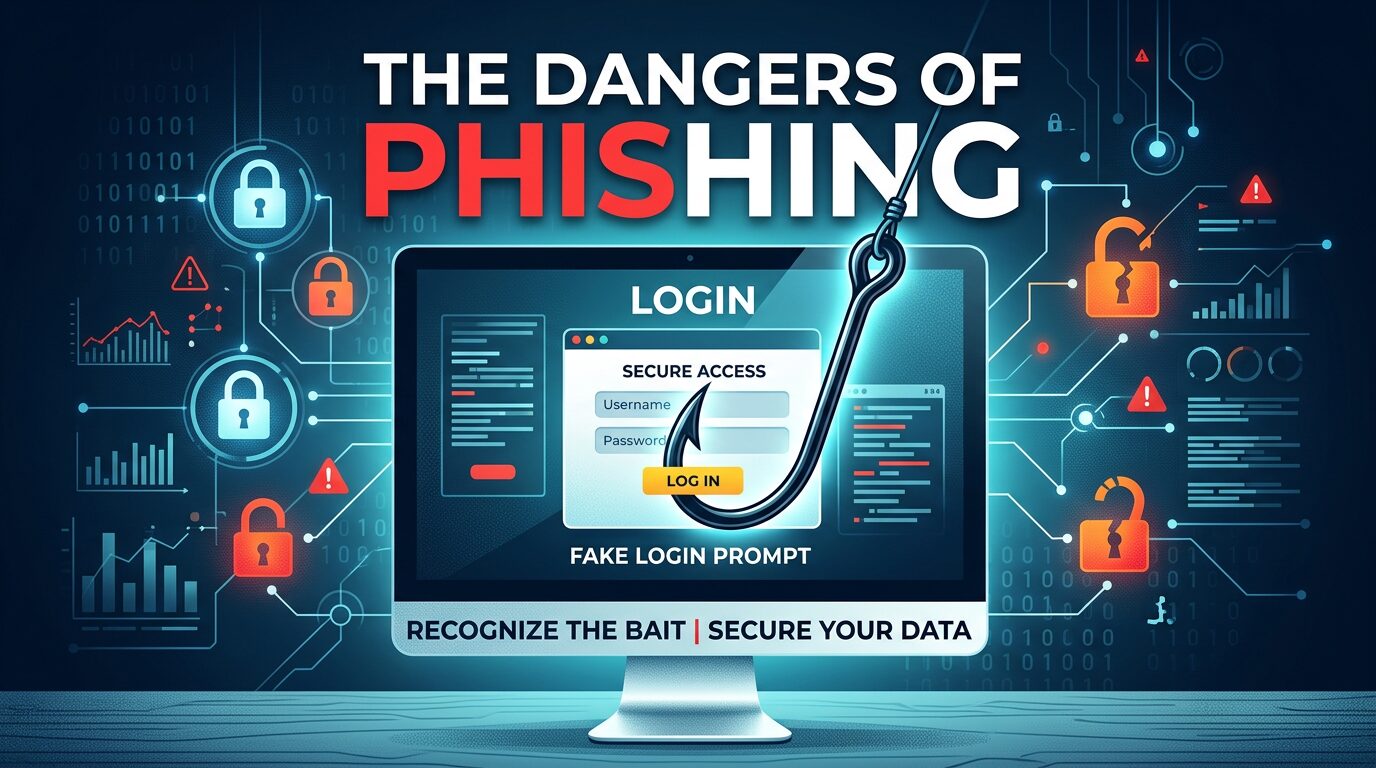
Phishing isn’t just an IT buzzword—it’s a common attack vector that gets people every day. Optical practices, with valuable patient health information and a busy staff, are prime targets for sophisticated email and text phishing scams. Since one click can expose confidential records and trigger HIPAA liability, awareness and action is critical for every eye care team
What is Phishing?
Phishing attacks are deceptive messages pretending to be legitimate sources—vendors, IT providers, even other staff—trying to trick recipients into clicking malicious links, sharing passwords, or sending sensitive data. Today’s attacks use official-looking emails, realistic sender addresses, and urgent messages about overdue invoices, EHR logins, etc.
How to Spot (and Stop) Phishing
- Look for minor spelling or grammar errors in messages
- Hover over hyperlinks to verify true destination addresses
- Check sender emails carefully—one letter or symbol off is a red flag
- Never download unexpected attachments or “urgent” invoice PDFs
- If unsure, verify with IT or management before clicking or replying
Protecting Your Practice: Best Practices
- Train all staff in anti-phishing awareness, including regular refresher sessions
- Enable two-factor authentication on all accounts
- Implement advanced spam and malware filtering tools
- Report and document attempted phishing attacks immediately
- Regularly review EHR and email access logs for suspicious activity